


Views: 0 Author: Site Editor Publish Time: 2026-03-05 Origin: Site


Buying an engine is never a casual decision. When equipment is already down or operating at reduced capacity, every choice carries consequences for cost, schedule, and long-term reliability. This is exactly why a structured checklist matters when purchasing a used engine. Without a clear process, buyers risk disputes, unexpected failures, and avoidable after-sales problems. At KELUO, we see that the most successful purchases are not driven by price alone, but by preparation. A standardized checklist transforms uncertainty into control and helps buyers move forward with confidence rather than hope.
Before looking at any engine listings or quotations, buyers need to clarify what really matters for their operation. This step shapes every decision that follows.
The first and most important question is the consequence of failure. If the engine stops unexpectedly, does it delay a critical construction project, shut down an industrial line, or interrupt power supply? In some cases, failure causes inconvenience. In others, it causes financial penalties, safety risks, or reputational damage. The higher the consequence, the stricter the inspection and verification standards should be.
Understanding failure impact also helps determine acceptable risk. Not every application requires the same tolerance level, and recognizing this early prevents unrealistic expectations later.
Budget and uptime are always connected, but one usually takes priority. Some buyers need the lowest possible upfront cost, while others value immediate availability and predictable performance. A buyer focused on uptime may accept a higher purchase price in exchange for better testing and faster delivery. Clarifying this priority at the start ensures that engine selection aligns with real operational needs rather than abstract assumptions.
Documentation is often overlooked, yet it is one of the strongest tools for reducing risk when buying a used engine.
Every engine has a unique identity. Engine codes and serial numbers confirm configuration, compatibility, and production details. Verifying these identifiers helps ensure that the engine matches the intended application and prevents confusion caused by similar model names. Traceability is not about paperwork for its own sake; it is about knowing exactly what you are buying.
Service records and donor information provide insight into how the engine was used. Engines removed from well-maintained equipment operating under stable conditions tend to offer better remaining life. Donor details also help buyers understand operating environments and load patterns. Awareness of recalls or known issues associated with certain configurations further strengthens decision-making.
A visual inspection cannot reveal everything, but it can quickly identify major warning signs.
Oil leaks, coolant residue, visible cracks, or excessive corrosion indicate stress or neglect. While some external wear is normal, severe damage often signals deeper issues. Early identification of these signs helps buyers avoid engines that may require extensive repair before use.
Fluid condition tells a story. Milky oil, contaminated coolant, or heavy residue may indicate internal mixing or poor maintenance. Clean separation of fluids and normal coloration suggest healthier internal systems.
Electrical connectors and wiring harnesses are critical for modern engines. Damaged insulation, corroded terminals, or missing connectors can cause operational problems after installation. Inspecting these components early prevents installation delays and troubleshooting later.
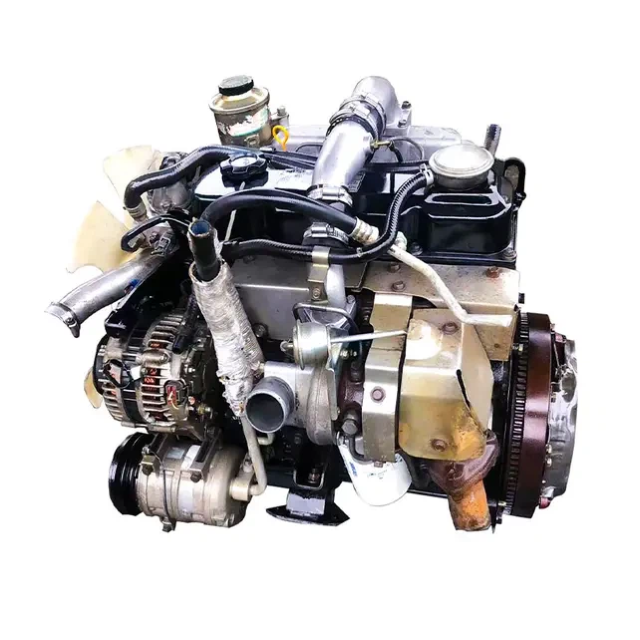
Testing evidence is the difference between assumption and verification. For most professional buyers, testing should never be optional.
Compression testing provides a general overview of cylinder condition and sealing. Even results across cylinders suggest balanced internal wear. However, compression alone does not reveal all issues, which is why it should be considered a baseline rather than a final judgment.
Leakdown testing offers deeper insight into how well an engine seals under pressure. It helps identify leakage paths through valves, rings, or head gaskets. This test is particularly valuable for understanding remaining service life and potential future maintenance needs.
A run-test demonstrates how the engine behaves during operation. Smooth idle, stable speed, and normal sound patterns provide confidence that the engine can perform under real conditions. Video evidence adds transparency for buyers who cannot inspect the engine in person.
Item | Why It Matters | How to Verify | Accept / Reject Rule |
Engine ID | Confirms compatibility | Check code and serial | Reject if unclear |
Service background | Indicates wear history | Review donor info | Reject if unknown |
Compression results | Shows cylinder balance | Compare values | Reject if uneven |
Leakdown results | Confirms sealing | Review test data | Reject if excessive |
Run-test evidence | Proves operation | Watch test video | Reject if unstable |
The buying process does not end with payment. Shipping and commissioning play a major role in overall success.
Proper packaging protects engines during transport. Strong crates, secure mounting, and protective materials prevent damage to sensitive components. Packing photos provide assurance that the engine was prepared responsibly before shipment.
Upon arrival, a receiving inspection confirms that the engine matches expectations. Visual checks, confirmation of included components, and verification against documentation help catch issues early. Addressing discrepancies at this stage is far easier than after installation.
Initial start-up sets the tone for future operation. Replacing fluids and filters establishes a clean baseline. Monitoring temperature, pressure, and sound during early operation helps identify issues before they escalate. The first operating hours should be treated as an observation period rather than a stress test.
Disputes often arise not from bad intent, but from unclear expectations. A checklist aligns buyer and seller understanding by defining verification standards in advance. When requirements are clear, transactions proceed more smoothly, and after-sales issues decrease significantly.
For buyers, a checklist reduces emotional decision-making. It replaces guesswork with structured evaluation, which leads to better long-term outcomes.
Used engines are widely adopted because they support flexibility. They allow companies to manage capital, respond quickly to failures, and extend equipment life. However, these benefits are realized only when purchases are made carefully. A checklist ensures that practicality does not become compromise.
KELUO supports customers by supplying engines that align with these principles. Our used engines undergo careful inspection, and relevant information is provided to support buyer evaluation. This approach reflects our experience as a supplier of construction machinery, engines, and parts to global markets.
Preparation transforms buying behavior. Buyers who prepare thoroughly rarely regret their decisions, even when challenges arise. Those who skip steps often face avoidable problems. A checklist is not about slowing the process down; it is about preventing setbacks that cost far more time and money later.
The more information you can verify before purchase, the lower your risk after installation. When buyers follow a structured checklist, purchasing a used engine becomes a controlled and reliable process rather than a gamble. KELUO combines experience, inspection capability, and global delivery support to help customers source engines with confidence. If you are planning to purchase a second-hand engine and want clear documentation, testing information, and professional support, contact us today and submit your requirements through our used engine product page.
Defining your “must not fail” requirements and understanding the consequences of failure is the most important first step.
No. Visual inspection should be combined with testing evidence such as compression, leakdown, and run-test results.
Documentation confirms identity, compatibility, and usage history, reducing disputes and unexpected issues after purchase.
Yes. KELUO supports customers by providing inspection details and relevant information to help buyers evaluate used engines before purchase. Contact us to learn more.


