


When an engine fails, hesitation is costly. Equipment stops, projects slow down, and every additional day of downtime puts pressure on budgets and delivery schedules. In this moment, many decision-makers find themselves stuck between two options: used engine or rebuild. This choice is rarely simple, because it is not just a technical issue—it is a business decision that affects time, cash flow, and future reliability. At KELUO, we work closely with customers facing this exact dilemma, and the most successful decisions are always made by comparing total ownership impact rather than focusing on a single repair bill.
Before comparing prices or timelines, the most important step is understanding the nature of the problem itself. The right solution depends on what has actually gone wrong and what you expect from the equipment in the future.
A catastrophic failure, such as a broken crankshaft, severe overheating damage, or internal seizure, usually indicates widespread internal wear. In these cases, rebuilding can become complex and unpredictable. Multiple components may need replacement, machining quality becomes critical, and the final outcome is not always guaranteed. For many operators, replacing the entire engine with a tested used unit offers clearer expectations.
Gradual performance loss tells a different story. Symptoms such as reduced power, increased fuel consumption, or higher oil usage may suggest wear that could potentially be addressed through rebuilding. However, even in these cases, the scope of internal damage is not always known until the engine is fully disassembled, which introduces uncertainty into both cost and timeline.
Another key question is whether this decision is meant to solve an immediate problem or support a long-term equipment strategy. If the goal is to get a single machine back into operation quickly, replacement often makes more sense. If the engine is part of a standardized fleet with long-term usage plans, rebuilding may appear attractive in theory. However, long-term planning still requires predictable outcomes, and unpredictability is one of the main challenges of rebuilds.
Cost is often the first comparison buyers make, but focusing only on the invoice amount can be misleading. A realistic comparison looks at all cost drivers involved in each option.
Rebuilding an engine involves far more than replacing a few worn components. Parts costs can escalate quickly, especially when major internal components require replacement. Machining work must be precise, and its quality directly affects engine life. Labor hours are often underestimated, particularly when unexpected damage is discovered during disassembly.
What makes rebuild cost difficult to control is uncertainty. Initial estimates may rise as additional issues are found, and delays can increase labor expenses. For buyers operating under tight budgets, this lack of cost transparency can be a serious concern.
Replacing an engine with a used unit involves a different cost structure. The engine itself is a clear, upfront expense. Installation labor is usually predictable, and downtime can often be planned more accurately. While the purchase price of a used engine may appear higher than an initial rebuild estimate, the total cost often becomes more stable once downtime and labor variability are considered.
From a total ownership perspective, replacement often provides clearer financial boundaries, especially when time is a critical factor.
Time is often the most underestimated cost factor. Equipment that is not operating generates no return, regardless of how low the repair bill might be.
Rebuild timelines are difficult to predict. Parts availability, machining schedules, and workshop capacity all influence completion time. Even well-planned rebuilds can face delays if additional damage is discovered late in the process. For operators relying on a single piece of equipment, these delays can disrupt entire projects.
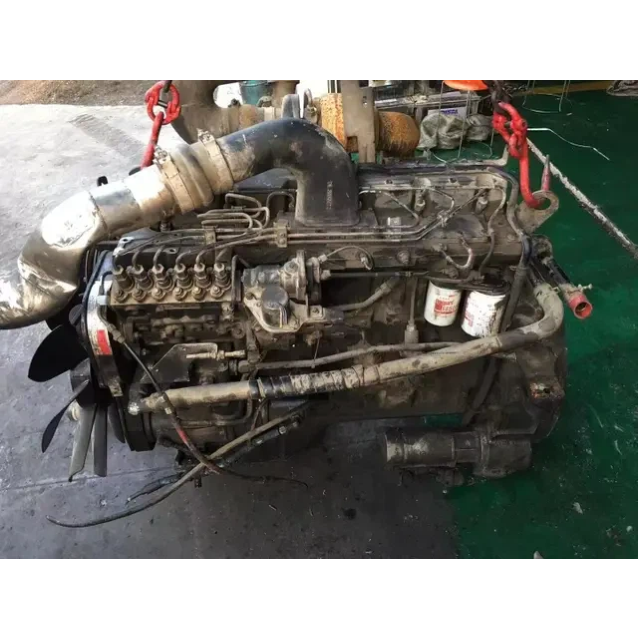
A used engine that is already inspected and prepared for shipment offers a much clearer path back to operation. Once the engine is selected, shipping and installation can be scheduled with greater certainty. For businesses where uptime directly affects revenue, this predictability often outweighs the perceived benefits of rebuilding.
Both rebuilding and replacing involve risk, but the type of risk differs. The key is understanding which risks can be managed more effectively.
The success of a rebuild depends heavily on the workshop performing the work. Variations in technician skill, tooling, and quality control can lead to inconsistent results. Parts quality also plays a critical role. Even small deviations in tolerances can affect long-term performance, making rebuild outcomes harder to guarantee.
The primary risk with a used engine is uncertainty about its past. However, this risk can be reduced through documentation, inspection, and testing. Engines supported by clear condition information offer buyers more confidence than rebuilds that rely on assumptions until assembly is complete.
Testing and documentation shift decision-making from emotion to evidence. Compression results, operational checks, and clear configuration details help buyers understand what they are installing. This transparency makes replacement risk more measurable and manageable.
Factor | Choose Used Engine When… | Choose Rebuild When… | Notes |
Failure type | Damage is severe | Wear is limited | Severity matters |
Downtime tolerance | Downtime is costly | Time is flexible | Time impacts revenue |
Cost predictability | Fixed budget needed | Budget can adjust | Rebuild costs vary |
Workshop reliability | External rebuild quality uncertain | Trusted workshop available | Skill consistency |
Future usage | Short- to mid-term operation | Long-term standardized use | Strategy driven |
Even the best engine decision fails if compatibility is overlooked. Fit is not only physical but also operational.
An engine must align with existing mounts, transmission interfaces, and control systems. Mismatches can lead to installation delays or additional modification costs. Replacement engines that closely match original specifications simplify installation and reduce risk.
How the engine will be used matters as much as its specifications. Continuous operation places different demands on an engine than intermittent use. Matching the engine’s design and condition to the actual duty cycle helps ensure stable performance and longer service life.
In real-world scenarios, many buyers lean toward replacement not because rebuilding is impossible, but because replacement offers clarity. Clear cost, clear timeline, and clear expectations reduce decision stress. This is especially true for international buyers managing projects across borders, where rebuild oversight is more challenging.
KELUO supports this practical approach by supplying used engines that are selected for real applications rather than theoretical scenarios. Our experience in construction machinery and hydraulic power allows us to understand how engines are actually used in the field.
Used engines are not just technical solutions; they are financial tools. They allow companies to control capital expenditure, respond quickly to breakdowns, and extend equipment life without overcommitting resources. When evaluated through total ownership cost, replacement often aligns better with business realities.
The most reliable way to decide between repair and replacement is simple: calculate downtime cost first, evaluate what can be verified second, and then choose the option that offers the clearest outcome. KELUO supplies a wide range of inspected engines for construction machinery and industrial equipment, helping customers restore operations quickly and confidently. If your priority is fast recovery and predictable results, explore our used engine solutions and contact us today to discuss your application and receive tailored support for your engine rebuild versus replacement decision.
In most cases, yes. Replacement offers clearer timelines, while rebuilds often face delays due to parts and inspection uncertainty.
Not always. Rebuild costs can increase as hidden damage is discovered, while used engine replacement usually has a more predictable total cost.
Risk depends on verification. A tested used engine with documentation often carries less uncertainty than a rebuild with unknown internal conditions.
Yes. KELUO supports customers by matching used engines to specific applications and operational needs. Contact us to discuss your requirements.


