


Views: 0 Author: Site Editor Publish Time: 2025-05-30 Origin: Site


Volvo is a world-renowned manufacturer celebrated for its innovation, quality, and engineering excellence. The company’s reputation extends across multiple industries, including passenger vehicles, heavy-duty trucks, construction equipment, and marine applications. At the heart of all these products lies one crucial element: the engine. But what engine does Volvo use? This question touches upon the diverse powertrain technologies that Volvo employs across its wide-ranging product lines.
This comprehensive article delves into the various engines Volvo uses, their technological features, applications, and why these engines are considered among the best in their class. Whether you’re a Volvo vehicle owner, fleet manager, or simply curious about engine technology, understanding Volvo’s engine portfolio provides valuable insight into their performance and reliability.
Volvo’s passenger car division has traditionally developed its own family of engines, but it has evolved significantly over the past decades to embrace modern trends of efficiency, downsizing, and electrification.
Volvo once developed a range of inline-4, inline-5, and inline-6 engines known as the Volvo Modular Engine family, celebrated for their smooth operation, reliability, and innovative design features. These engines powered many of Volvo’s popular models for years.
Today, Volvo’s internal combustion engine lineup largely revolves around the Drive-E powertrain family. Drive-E engines are primarily 2.0-liter four-cylinder turbocharged and supercharged units that provide a blend of performance, fuel economy, and lower emissions.
Turbocharging and Supercharging: The combination of turbochargers and superchargers enables these engines to produce high power outputs while maintaining fuel efficiency.
Fuel Types: Drive-E engines run on gasoline or diesel, depending on the market, with variations designed to meet local regulations.
Emissions Compliance: These engines meet stringent global emissions standards such as Euro 6, through technologies like direct fuel injection, variable valve timing, and exhaust gas recirculation (EGR).
Volvo is a pioneer in electrification, with hybrid and plug-in hybrid versions of many models. The Drive-E engine often pairs with an electric motor to create a powerful and efficient hybrid system.
Plug-in Hybrid Models: Vehicles like the Volvo XC60 and XC90 Recharge combine internal combustion engines with electric motors, allowing for electric-only driving over short distances and reducing overall emissions.
Fully Electric Vehicles: Volvo has announced plans to become a fully electric car manufacturer by 2030, signaling a major shift away from traditional combustion engines.
Volvo Trucks and Volvo Buses are industry leaders in commercial vehicle manufacturing. The engines powering these machines are critical for durability, fuel efficiency, and environmental compliance.
Volvo’s D-series diesel engines, including models like the D11, D13, and D16, form the backbone of its commercial truck powertrain lineup.
Displacement and Power: These engines range from approximately 10.8 to 16.1 liters, delivering power outputs from around 330 to 600 horsepower, depending on the variant.
Torque: High torque levels, often exceeding 2,500 Nm (Newton meters), ensure excellent pulling power for heavy loads.
Emission Technologies: To comply with regulations like Euro 6 and EPA standards, Volvo employs selective catalytic reduction (SCR), diesel particulate filters (DPF), and exhaust gas recirculation (EGR).
Fuel Efficiency: Common-rail fuel injection and advanced combustion chamber designs optimize fuel use, reducing operational costs.
Volvo diesel engines power a wide variety of commercial vehicles:
Long-Haul Trucks: Designed for efficiency and driver comfort over long distances.
Construction Vehicles: Built to endure harsh conditions and heavy loads.
City and Regional Buses: Featuring low emissions and smooth operation.
Volvo integrates engine management with telematics systems, enabling fleet managers to monitor fuel consumption, driver behavior, and engine health remotely, improving efficiency and reducing downtime.
Volvo Construction Equipment (Volvo CE) uses engines designed to withstand tough conditions while delivering high performance.
Volvo CE engines include both in-house developed and outsourced engines, often from Cummins or Volvo’s own D-series, depending on the model and region.
Robust Design: These engines provide the high torque and power needed for machines like excavators, wheel loaders, and articulated haulers.
Emission Compliance: Equipment engines meet Tier 4 Final or Stage V emission standards using technologies like SCR and diesel oxidation catalysts.
Fuel Efficiency: Innovations such as electronic fuel injection and turbocharging help lower fuel consumption.
Construction engines must handle dusty, dirty environments with temperature extremes. Volvo engines are designed with reinforced components, advanced cooling systems, and dust-resistant air filtration to ensure long life and minimal maintenance.
Volvo Penta, Volvo’s marine engine division, delivers power solutions for recreational and commercial vessels worldwide.
Volvo Penta offers:
Gasoline and Diesel Engines: Ranging from small outboard motors to powerful inboard diesels.
Hybrid Systems: Combining internal combustion with electric propulsion for quieter, cleaner marine travel.
Volvo Penta marine engines incorporate:
Electronic Fuel Injection: For precise fuel delivery and efficiency.
Turbocharging: Boosts power output while controlling emissions.
Electronic Controls: Enable smooth throttle response and easy diagnostics.
Volvo Penta engines are found in:
Yachts and Pleasure Craft: Offering reliability and comfort for leisure boating.
Commercial Vessels: Including fishing boats and passenger ferries requiring rugged, dependable power.
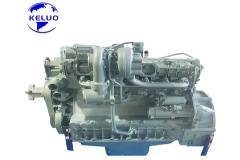
Volvo engines are celebrated globally for several reasons:
Volvo invests heavily in research and development, integrating the latest engine technologies that improve fuel economy, reduce emissions, and enhance power delivery.
Meeting the toughest global emissions regulations is a priority. Volvo engines employ SCR, DPF, EGR, and increasingly hybrid/electric technology to minimize environmental impact.
Volvo engines are built to last in challenging environments, with robust components, advanced diagnostics, and a global service network that ensures parts and expertise are readily available.
Volvo’s broad engine portfolio suits a wide range of vehicles and equipment, from compact cars to massive trucks and industrial machinery.
Volvo offers a wide range of engines expertly designed to meet the specific needs of various applications—from advanced gasoline and diesel powertrains to hybrid systems and fully electric motors. Whether it’s powering a reliable and safe passenger vehicle, hauling heavy loads on the highway, operating rugged construction machinery, or driving marine vessels through challenging waters, Volvo engines consistently deliver cutting-edge technology, exceptional durability, and strong environmental performance.
If you’re looking for high-quality Volvo engine parts, reliable maintenance solutions, or professional technical support, KELUO is your trusted partner. With extensive experience and a comprehensive inventory, KELUO ensures your Volvo equipment stays in peak condition, minimizing downtime and maximizing productivity. Their dedicated team is ready to assist with tailored advice and prompt service, helping you get the most from your Volvo machinery.
To explore more about Volvo engines or to find the right parts and support for your specific needs, visit KELUO’s website or contact their experts directly. Choosing KELUO means choosing reliability, expertise, and peace of mind for your Volvo-powered operations.


