


Views: 0 Author: Site Editor Publish Time: 2026-02-12 Origin: Site


Doubt is often the first reaction when people hear the phrase used engine. For buyers responsible for keeping construction machinery or industrial equipment running, the engine is not just a component—it is the heart of productivity. Any uncertainty about reliability, lifespan, or performance feels risky. This hesitation is reasonable, especially for international buyers who may not see the engine in person before purchase. At KELUO, we regularly work with customers who begin with skepticism but move forward once they understand how a used engine should be evaluated. Experience shows that the real issue is not whether an engine is used, but whether its condition and suitability can be verified in a practical, professional way.
Used engines are widely adopted in global markets not because buyers want to compromise, but because they offer realistic solutions to real operational challenges.
Engine overhaul is often perceived as the safer choice because it feels controlled. However, once an engine reaches a certain level of wear or damage, rebuilding becomes complex and unpredictable. Internal cracks, worn crankshafts, or damaged cylinder walls can significantly increase rebuild time and cost. In these situations, replacing the entire engine with a verified used unit provides clarity. Buyers know the configuration, expected performance, and delivery timeline in advance, which helps stabilize project planning.
Replacement also reduces dependency on local workshop capabilities. Rebuild quality can vary depending on technician skill and tooling, while a prepared used engine arrives as a complete power unit ready for installation.
In many industries, time is the most valuable resource. Construction projects, mining operations, and industrial plants often operate under strict deadlines. A machine sitting idle for weeks while an engine is rebuilt can cause losses far greater than the cost difference between new and used. A used engine that is available immediately allows operators to restore functionality quickly. In these cases, reliability is measured by readiness and consistency rather than absolute newness.
A good used engine is not defined by appearance or promises. It is defined by performance indicators that reflect real operating ability.
One of the most important signs of a healthy used engine is stable operation under working load. The engine should respond predictably to throttle input, maintain steady speed, and deliver smooth power without vibration or hesitation. Stability under load indicates that major internal components are functioning correctly and that the engine can handle continuous operation rather than short test runs.
Compression consistency across cylinders is a fundamental indicator of internal condition. Even compression suggests that pistons, rings, valves, and cylinder walls are sealing properly. This directly affects combustion efficiency, power output, and fuel consumption. Engines with uneven compression often suffer from early performance decline and increased maintenance needs.
Fluid behavior reveals internal health. A reliable used engine shows no signs of oil and coolant mixing, excessive blow-by, or abnormal consumption. During operation, oil pressure and coolant temperature should remain within stable ranges. These factors together provide confidence that internal pathways and seals are intact.
Every used engine purchase involves risk, but risk does not mean uncertainty if it is managed correctly.
An engine without maintenance records leaves buyers guessing how it was used. Engines that operated under extreme loads or irregular servicing may have hidden wear. Buyers can reduce this risk by requesting donor equipment information, approximate service intervals, and usage environment details. Even limited information helps establish whether the engine was treated responsibly.
Some forms of wear cannot be identified visually. This is why structured testing is critical. Compression testing provides an overview, leakdown testing offers deeper insight into sealing quality, and run-testing confirms real operating behavior. Engines supported by testing data give buyers a clearer picture of internal condition.
Installing an engine that does not fully match the target application can create significant challenges. Differences in mounting points, control systems, or power output may require modification and delay installation. Verifying engine codes, specifications, and configuration before shipment reduces the risk of mismatch and unexpected costs.
Transportation is often overlooked as a risk factor. Engines are heavy, complex assemblies with sensitive external components. Proper crating, protective materials, and secure positioning during transport are essential. Photo documentation before shipment adds transparency and accountability.
Even experienced teams may need clarification during installation or initial start-up. Clear communication and defined post-delivery support reduce stress and help ensure successful commissioning. Buyers should understand what level of assistance is available after the engine arrives.
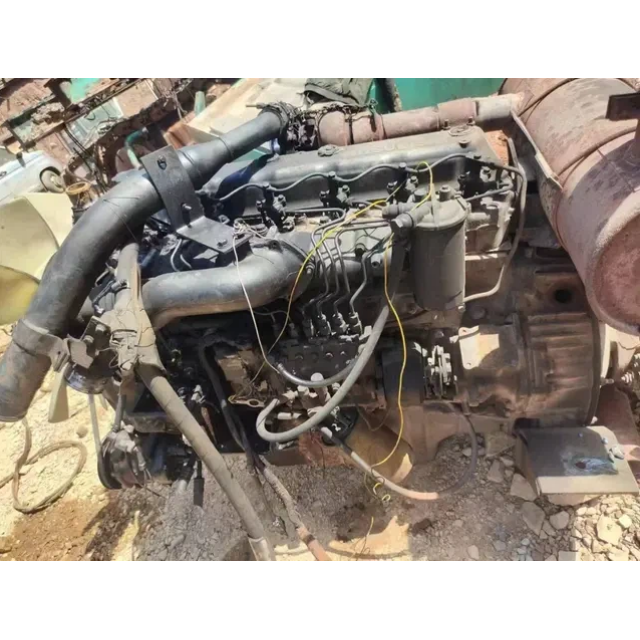
The questions asked before payment often determine the success of the purchase.
Operating hours should be supported by credible sources such as donor machine meters or maintenance logs. Understanding how these figures were recorded adds credibility and context.
Test results should be specific. Numerical values, testing methods, and dates provide objective information that buyers can evaluate and compare. General statements without data offer little reassurance.
Clarifying included components avoids confusion later. Items such as electronic control units, turbochargers, fuel pumps, wiring harnesses, and sensors directly affect installation complexity. Knowing what is included allows buyers to plan accurately.
Topic | Green Flag | Red Flag | Your Next Question |
Documentation | Service or donor info available | No background provided | Can you share usage details |
Testing | Detailed test data | No measurable results | What tests were performed |
Packaging | Engine fully crated | Minimal protection | How will it be secured |
Components | Clear inclusion list | Missing key parts | What is not included |
Support | Start-up guidance available | No follow-up support | Who assists after delivery |
Buyers often want a precise lifespan estimate, but real-world performance depends on multiple interacting factors.
Maintenance quality consistently outweighs mileage alone. Engines that received regular servicing, clean fuel, and proper cooling often continue performing well even after extended use. Load consistency also matters. Engines operating under steady conditions tend to last longer than those exposed to frequent overloads or harsh environments.
Preventive maintenance immediately after installation sets the foundation for reliable operation. Replacing filters and fluids establishes a clean baseline. Monitoring temperature, pressure, and sound during early operation helps detect potential issues before they become serious.
KELUO supplies used engines for construction machinery and industrial applications with a focus on practical reliability. Our inventory is selected to meet real operating needs rather than theoretical benchmarks. Each engine is inspected to confirm configuration, basic performance, and suitability before delivery.
Our range includes options across different power levels and applications, allowing buyers to match engines to equipment more accurately. Brands such as Cummins, Mitsubishi, Weichai, Yuchai, and Yanmar are available to serve diverse market requirements. By clearly defining what is included and supporting efficient logistics, we help customers reduce uncertainty and move forward confidently.
Reliability does not come from the engine alone. It is the result of correct matching, realistic expectations, proper installation, and ongoing maintenance. Buyers who understand this system-level view tend to achieve better outcomes with used engines than those who focus on price alone.
In many cases, used engines are not a temporary fix but a strategic decision. They allow companies to extend equipment life, manage capital expenditure, and respond flexibly to changing workloads. When selected carefully, a used engine can support stable operations for years.
A used engine should never be chosen blindly, but it should not be dismissed simply because it is not new. With inspection, testing, and clear communication, it becomes a dependable solution for many applications. KELUO works with global buyers to supply engines that balance cost, availability, and performance. If you are evaluating whether a second-hand engine is right for your equipment, contact us today to discuss your needs and explore available options.
Yes. When properly inspected and matched to the application, used engines are widely used in critical operations around the world.
Condition and maintenance history are usually more important than hours alone. Well-maintained engines often outperform poorly maintained low-hour units.
Request testing data, service background, and clear information on included components. Proper packing and start-up support also reduce uncertainty.
Yes. KELUO supplies used engines globally and supports customers with inspection information, export packing, and logistics coordination. Contact us to learn more.


