


Views: 0 Author: Site Editor Publish Time: 2026-09-10 Origin: Site


Sourcing an industrial power unit requires moving past brand reputation. You must focus strictly on hard operational data. A mismatch in specifications leads to premature wear. It can also trigger compliance fines or cause severe equipment downtime. Whether repowering existing agricultural machinery or building a custom generator set, you face strict engineering constraints. Replacing an aging industrial unit demands equal precision. Selecting the right unit requires a rigorous evaluation of load profiles. You must assess cooling demands and verify emission standards. You cannot rely on guesswork when evaluating heavy-duty machinery. This guide breaks down the critical specifications needed for operational success. It outlines the specific evaluation criteria required to navigate your diesel engine selection process confidently. You will learn exactly how to match physical hardware constraints to your real-world performance demands.
Match Power to Load Profile: Peak horsepower is secondary to torque curves and continuous vs. intermittent power ratings.
Cooling Systems Dictate Environment: Deutz’s legacy air-cooled engines excel in harsh, debris-heavy environments, while modern liquid-cooled units offer denser power footprints.
Compliance is a Spatial Constraint: Tier 4 Final and Stage V emissions standards require factoring in the physical dimensions of exhaust aftertreatment systems (EAS).
Every equipment integration project starts by framing the core engineering problem. You must match an industrial diesel engine to the specific duty cycle of your machinery. Do not focus solely on peak output requirements. High horsepower numbers look impressive on a spec sheet. However, they mean little if the power delivery does not align with actual operational loads.
You need to evaluate specifications based on targeted operational hours. Equipment falls into two broad power categories:
Continuous Power: Generator sets operating as prime power sources demand constant RPMs. They endure sustained loads for thousands of hours. These units require specific engine tuning focused on thermal stability. They prioritize steady-state longevity over rapid acceleration.
Intermittent Power: Agricultural tractors and material handlers experience highly variable loads. Operators constantly throttle up and down. These applications require engines tuned for rapid torque response. They must handle sudden spikes in mechanical resistance without stalling.
Operating environment constraints also dictate fundamental hardware requirements. Before reviewing catalogs, you must identify your geographical limitations. Extreme ambient temperatures affect oil viscosity and thermal management. High-altitude operations reduce air density. This reduction forces engines to work harder, requiring specific turbocharger configurations to prevent altitude derating. Furthermore, environments featuring heavy airborne debris require specialized filtration. Mining sites and dusty agricultural fields severely punish standard air intakes. These harsh realities ultimately dictate your engine aspiration and cooling system needs.
Once you define your duty cycle, you can evaluate specific mechanical dimensions. Choosing a reliable Deutz engine involves analyzing three major engineering categories. You must look beyond maximum horsepower to ensure equipment compatibility.
First, analyze the power and torque curves carefully. Low-end torque capabilities remain absolutely essential for heavy-duty starting loads. Industrial pumps, rock crushers, and heavily loaded conveyors require massive twisting force at low RPMs. If an engine only delivers peak torque near its maximum speed, it will struggle to initiate movement under heavy resistance.
Second, select the appropriate cooling architecture. Deutz offers distinct advantages in both air-cooled and liquid-cooled designs. Your operational environment determines the best choice.
Air-Cooled Architecture: These units feature lower maintenance complexity. They completely eliminate water pumps, radiators, and coolant hoses. They possess total immunity to freezing or boiling. This makes them ideal for remote, freezing, or exceptionally rugged operations.
Liquid-Cooled Architecture: Water-jacketed blocks provide superior temperature stability under continuous high loads. They run significantly quieter. They also enable much tighter emissions control by regulating internal combustion temperatures precisely.
Third, assess the physical footprint and Power Take-Off (PTO) options. You must measure the engine’s dimensions against your equipment’s engine bay. This step proves critical for repowering projects and custom swaps. You should evaluate flywheel housing sizes using standard SAE measurements. Additionally, check the availability of front and rear PTO options. You will need these attachment points to drive auxiliary hydraulic pumps or external compressors.
Chart: Engine Cooling Architecture Comparison
Architecture Type | Primary Advantage | Ideal Operating Environment | Maintenance Complexity |
|---|---|---|---|
Air-Cooled | Immunity to extreme temperature variations | Remote mining, dusty agriculture, freezing zones | Low (No coolant lines to leak or fail) |
Liquid-Cooled | Consistent thermal regulation under heavy loads | Urban construction, enclosed generator sets | Moderate (Requires radiator and fluid checks) |
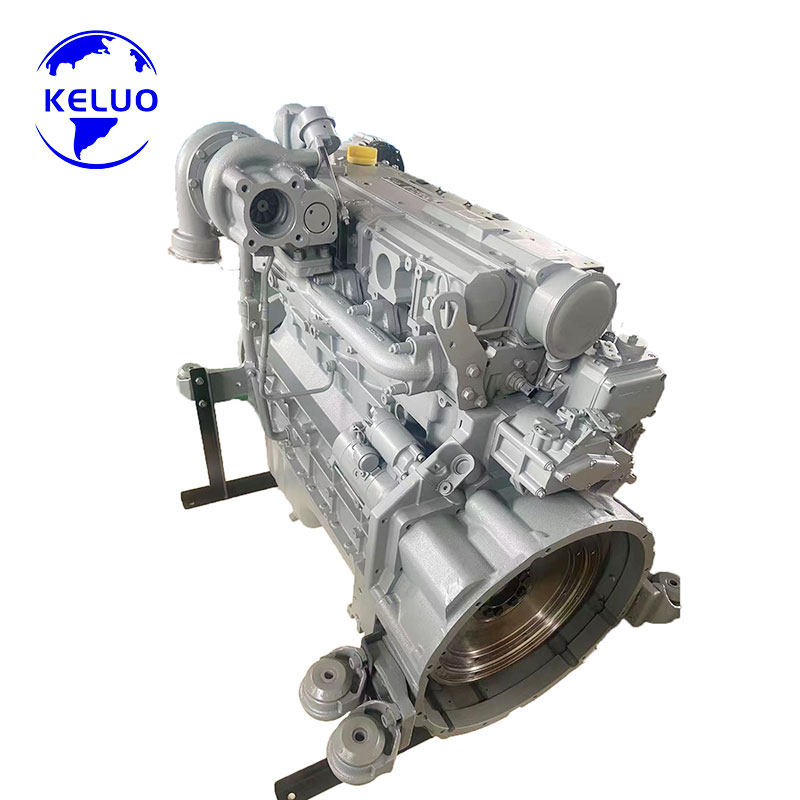
When heavy equipment operators seek reliable liquid-cooled power, they frequently analyze specific inline configurations. The BF6M 1013 engine represents a benchmark in this solution category. It functions as a heavy-duty, liquid-cooled, inline 6-cylinder powerhouse. Engineers designed it explicitly for high-demand industrial and construction applications.
The key performance specifications demonstrate its industrial capability. Displacement and power band ranges vary based on specific tuning and turbocharging configurations. Typically, this series delivers between 114 kW and 235 kW. It achieves remarkably high power density. The design remains highly compact relative to its impressive mechanical output. This allows manufacturers to fit substantial power into restricted equipment bays.
Buyers routinely shortlist this specific model for demanding use cases. Wheel loaders require its rapid torque delivery to push through heavy material piles. Excavators utilize its steady power to drive complex hydraulic systems continuously. Heavy agricultural machinery relies on its thermal stability during long harvesting days under the hot sun.
Several factors drive its reputation for reliability. It features exceptional mechanical robustness across the engine block and internal rotating assemblies. The fuel injection system delivers high efficiency, ensuring precise atomization for complete combustion. Furthermore, the design prioritizes serviceability. Technicians appreciate the ease of access to routine maintenance points. Oil filters, fuel separators, and drive belts sit in easily reachable locations. This thoughtful layout drastically reduces the time required for preventative maintenance.
Table: Technical Specifications Overview for BF6M 1013 Series
Specification Category | Typical Range / Value |
|---|---|
Configuration | Inline 6-Cylinder, Liquid-Cooled |
Power Output Range | 114 kW to 235 kW |
Aspiration | Turbocharged (Intercooling available) |
Primary Applications | Excavators, Loaders, Agricultural Machinery |
Modern equipment integration demands strict attention to regulatory realities. Choosing a compliant Deutz diesel engine requires strict adherence to local environmental laws. You must satisfy EPA requirements in the United States. You must meet Stage V regulations in Europe. Failing to align your engine choice with regional mandates prevents legal operation.
Meeting these standards requires extensive Exhaust Aftertreatment Systems (EAS). You can no longer just drop a bare engine into a chassis. You must evaluate the physical space claim for several bulky components. Diesel Particulate Filters (DPF) trap harmful soot. Selective Catalytic Reduction (SCR) units neutralize nitrogen oxides. Diesel Oxidation Catalysts (DOC) facilitate chemical breakdowns of exhaust gases. These canisters take up significant room. They often dictate the entire layout of an engine compartment.
Beyond physical space, you must understand ongoing EAS maintenance requirements. SCR systems require a constant supply of Diesel Exhaust Fluid (DEF). You must plan for DEF tank installation and fluid routing. Additionally, DPF components require periodic regeneration cycles. The engine must occasionally run at high exhaust temperatures to burn off accumulated soot. You need to ensure your duty cycle supports these thermal regeneration requirements naturally, or plan for forced regeneration downtime.
Conversely, export and less regulated markets offer different pathways. Specifying Tier 3 or completely uncertified engines remains legal in specific non-regulated territories. You might also use them for stationary emergency applications, like backup fire pumps. Selecting lower-tier models eliminates the need for bulky EAS hardware. It drastically simplifies installation. However, you must verify local legislation thoroughly before proceeding with non-certified builds.
Theoretical specifications mean little if you cannot successfully install the unit. Repowering and swap considerations introduce significant engineering realities. Retrofitting a new block into non-native equipment demands custom fabrication. You will likely need to design custom motor mounts to handle vibration frequencies. You must source or machine specific transmission adapter plates. Rerouting the cooling system often becomes necessary to clear existing frame rails or steering components.
Once installed, long-term operational viability relies entirely on aftermarket and OEM parts availability. You must evaluate the depth of your local dealer network. An engine is only as useful as the availability of its consumable components. You need immediate access to replacement belts, specialized filters, and calibrated fuel injectors. If parts require overseas shipping, your machinery sits idle. Strong regional distribution networks prevent catastrophic operational delays.
Finally, thoroughly review warranty and Service-Level Agreements (SLAs). Factory coverage varies wildly depending on the application context. A factory warranty covers specific industrial applications differently than agricultural or marine use. Running a stationary water pump places different stress on a block than propelling a heavily loaded tractor. You must transparently declare your exact use case to the distributor. This honesty ensures your warranty remains valid when you need it most.
A successful power unit selection balances raw mechanical capability with environmental compliance. You must match torque curves to your specific load profile. You must align cooling architectures with your operating environment. Furthermore, you have to account for the physical installation constraints demanded by modern exhaust aftertreatment systems. Ignoring any of these dimensions leads to rapid mechanical failure or severe integration delays.
Do not buy hardware based on peak horsepower specs alone. Compile your exact duty cycle data first. Measure your physical space constraints accurately. Verify your geographic emissions requirements completely. Your next step involves taking this data directly to a certified application engineer or an authorized distributor. They will cross-reference your requirements against specific build sheets. This professional verification guarantees your selected power unit will perform reliably in the real world.
A: Lifespan remains grounded in maintenance realities. These units typically run between 10,000 to 20,000 hours before requiring a major overhaul. This variance depends heavily on load factors, rigorous preventative maintenance schedules, and the harshness of the operating environment. Clean air and timely oil changes maximize longevity.
A: Yes, but you face significant engineering challenges. You must add external radiators, route complex coolant plumbing, and manage completely different physical dimensions. Additionally, modern liquid-cooled units often require integrating advanced electronic control units (ECUs) into older, purely mechanical equipment chassis.
A: Specific fuel consumption (measured in g/kWh) varies strictly by your load profile and operating RPM. There is no single flat rate. You must review the manufacturer's specific performance curve chart for your intended duty cycle to accurately project hourly fuel usage.
A: No. Requirements depend on specific emissions tiers and power output. Engines falling below certain horsepower thresholds (typically under 74hp/55kW) often only use a DOC or DPF. Furthermore, specific export models built for less regulated markets bypass DEF and SCR requirements entirely.


