


Views: 0 Author: Site Editor Publish Time: 2026-09-02 Origin: Site


Selecting the right earthmoving equipment represents a high-stakes capital decision for any contractor. You must carefully balance project efficiency against severe site constraints and daily operating limitations. Over-sizing your machine quickly leads to logistical headaches, unwanted surface damage, and wasted fuel on site. Conversely, under-sizing causes immediate project delays and places unnecessary strain on your equipment. We know these challenges frustrate operators and project managers daily. The primary goal here is to provide a purely objective, spec-driven framework for evaluating small construction equipment. You will learn to systematically assess job site realities and strict transport limitations. We will guide you through matching equipment specifications to your actual daily applications, ensuring maximum productivity. By the end, you will confidently navigate operating weight classes, tail swing profiles, and hydraulic capacities to secure the exact machine your fleet needs.
Site access dictates size: Physical chokepoints (gates, alleys, weight limits) must be your primary filtering criteria before evaluating horsepower.
Tail swing impacts workflow: Zero Tail Swing (ZTS) mitigates property damage risks in urban/residential settings, though it requires a trade-off in baseline lifting stability.
Transport logistics determine hidden costs: The total weight of the machine, attachments, and trailer must align with your existing fleet’s towing capacities to avoid regulatory (CDL) complications.
Hydraulics drive versatility: Evaluating auxiliary flow ensures the machine can scale beyond trenching to handle breakers, augers, and grapples.
Mapping your typical project environment serves as the foundational step in equipment sizing. You must carefully document the physical bottlenecks operators face daily. Residential and urban projects frequently present severe spatial limitations. Standard residential fence gates typically measure just 36 inches across. Narrow side yards and mature landscaping further restrict machine movement. You also need to account for low-clearance overhead utility lines. Operators often find themselves trapped when equipment cannot safely pass under residential power drops. Always measure your most restrictive access points before you look at engine specifications.
Machine weight directly impacts finished surfaces. You must evaluate ground pressure when operating on established turf, residential driveways, or public sidewalks. Heavy machinery easily cracks cured concrete or destroys meticulously graded landscaping. Low ground pressure becomes an absolute necessity for landscaping applications. Distributing machine weight across wider tracks minimizes the pounds per square inch (PSI) exerted on the ground. You want your operators completing the job, not repairing deep ruts in a client's lawn.
Emission and noise compliance dictates equipment suitability in highly regulated zones. Specific job sites now mandate zero-emission electric models or strictly require Tier 4 Final diesel engines. Indoor renovations and hospital zones strictly forbid diesel exhaust. Strict Homeowner Association (HOA) noise curfews often penalize the loud operation of older diesel equipment. You need to map these regulatory boundaries clearly. Securing compliant machinery prevents costly project shutdowns and maintains good relationships with local authorities.
Operating weight classes define the physical footprint and raw capability of your machine. When you evaluate core sizing metrics for a small mini excavator, you will encounter distinct tiers. The sub-1-ton micro machines squeeze through doorways but lack substantial lifting power. The 3-to-4-ton class dominates heavy utility work but requires heavier transport equipment. The 1.8 ton mini excavator class serves as a common industry sweet spot. It perfectly balances aggressive breakout force with standard pickup truck towability. You get enough weight to stabilize heavy trenching without triggering complex hauling requirements.
Maximum dig depth frequently misleads eager buyers. Do not pursue maximum spec numbers just for bragging rights. Frame your depth requirements around actual, repeated project needs. Consider standard local frost lines, average utility trenching depths, and common foundation footings. If you only dig 48-inch utility trenches, paying for a machine capable of a 12-foot dig depth wastes capital. Buy the depth you use daily.
Dump height and maximum reach dictate material handling efficiency. You must match the excavator's dump height to your specific haul trucks or roll-off dumpsters. If the bucket cannot clear the sideboard of your tri-axle dump truck, operators must double-handle the material. This severely cripples daily productivity. Reaching the center of the truck bed ensures even load distribution, keeping your transport vehicles safely balanced on the highway.
Contractors frequently fall into a common implementation risk trap. They buy equipment tailored for a 5% outlier project rather than their 95% core daily application. This mistake leaves you hauling a massive, cumbersome machine to simple backyard jobs. Always purchase equipment sized for your everyday bread-and-butter work. When you secure that rare, deep-digging commercial contract, simply rent a larger machine for the week.
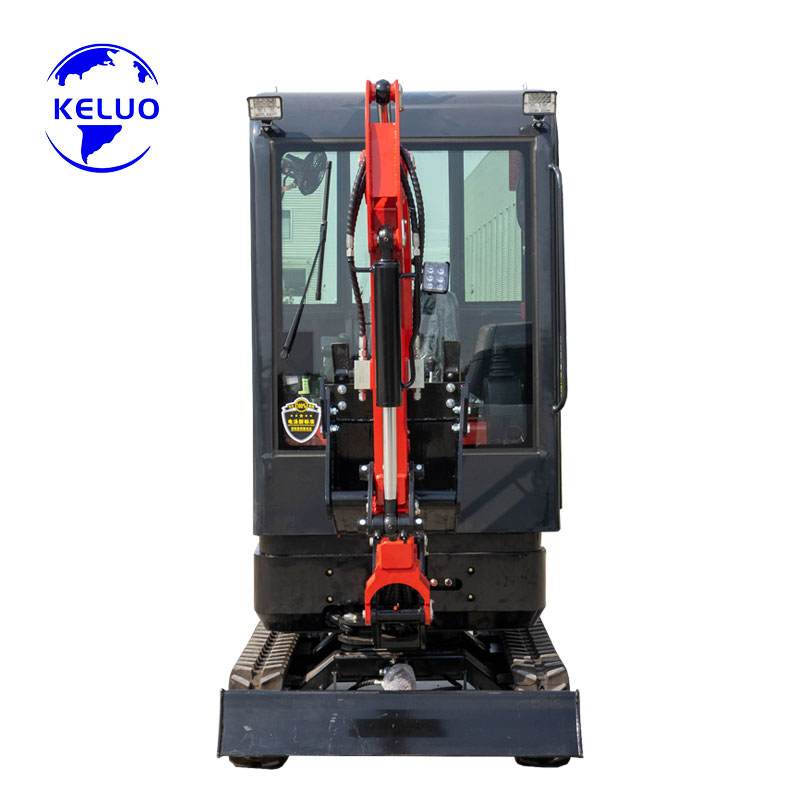
Choosing between Zero Tail Swing (ZTS) and conventional models dramatically impacts site safety and lifting performance. A ZTS housing stays entirely within the track width during a full rotation. This design proves essential for tight residential property lines. Operators can spin the cab freely without checking their blind spots for walls, fences, or nearby workers. However, this compact design removes the rear counterweight leverage.
Conventional tail swing models offer significantly better leverage and overall lifting capacity. The overhanging counterweight provides crucial stability for heavier digging and lifting tasks. However, this design requires a much larger operating footprint. An operator must remain hyper-aware of the swinging rear end to avoid catastrophic property damage.
Table: Conventional vs. Zero Tail Swing (ZTS) Excavators
Feature | Zero Tail Swing (ZTS) | Conventional Tail Swing |
|---|---|---|
Housing Rotation | Stays inside track width | Overhangs past the tracks |
Primary Advantage | Prevents property/obstacle damage | Higher lifting capacity and stability |
Best Application | Urban, residential, tight alleys | Open sites, heavy lifting tasks |
Operator Visibility | Reduced blind-spot collision risk | Requires constant rear monitoring |
Track selection remains critical for a crawler mini excavator. Rubber tracks stand out as the industry standard for minimizing damage to pavement, asphalt, and soft landscaping. They offer a smoother ride and cross driveways without requiring plywood protection mats. Conversely, steel tracks become necessary for harsh, abrasive terrain. Demolition sites, scrap yards, or rocky hillsides will quickly tear rubber tracks to shreds. Steel tracks deliver superior traction in slick mud and handle sharp debris effortlessly.
Retractable undercarriages offer incredible versatility for compact job sites. Operators can hydraulically retract the tracks to squeeze the machine through narrow pedestrian gates. Once positioned in the work zone, the operator expands the tracks back outward. This expansion creates a wider footprint, instantly restoring operational stability for safe trenching and lifting.
You must view your machine as a versatile tool carrier, not just a simple digging bucket. Auxiliary hydraulic flow, measured in gallons per minute (GPM), dictates ultimate capability. The GPM dictates your ability to run power-hungry attachments successfully. Hydraulic breakers, forestry mulchers, and heavy-duty flail mowers demand significant continuous flow. If you purchase a machine with low auxiliary flow, it will stall or overheat when running these demanding tools. Always verify standard and high-flow options during the spec review.
Quick coupler systems drastically reduce costly operator downtime. When an operator switches manually between buckets, thumbs, and augers, they lose valuable production minutes. Mechanical quick couplers offer an affordable way to speed up this process using a manual locking pin. Hydraulic quick couplers provide an even better return on investment. The operator simply pushes a button inside the cab to drop one tool and grab another. This system excels on multi-task sites where changing attachments happens several times a day.
Arm length configurations present a necessary mechanical trade-off. A long arm configuration provides extra reach and depth for tricky utility taps. However, physics dictates a penalty for this extended lever. A longer arm noticeably reduces your available breakout force. You will also experience a drop in overall bucket capacity to maintain stability. Standard arms provide aggressive digging power and optimal lifting geometry. You must weigh the need for extra reach against the demand for raw prying force.
The math of hauling equipment requires exact precision and legal compliance. Trailering dictates your actual daily mobility. You must calculate the combined weight of the machine, the trailer, and all attachments. This total number must sit safely below the towing vehicle's Gross Combined Weight Rating (GCWR). A heavy machine on an inadequate trailer guarantees severe highway accidents and massive liability.
Commercial Driver's License (CDL) requirements heavily influence equipment sizing. In many jurisdictions, crossing the 26,000-pound combined threshold triggers strict CDL mandates. If your standard crew members lack a CDL, purchasing equipment that pushes your rig over this limit grinds your logistics to a halt. Always audit your existing truck fleet before finalizing an equipment purchase.
Proper tie-down points ensure safe and compliant highway transport. You need easily accessible, factory-rated D-rings or tie-down anchors. Operators must cross-chain the equipment rapidly at the end of a long day. If tie-down points hide behind tracks or under heavy guards, operators will improperly secure the load. Ensure the machine balances perfectly on your standard trailers to maintain proper tongue weight.
Routine maintenance access dictates machine longevity. Let us state a simple industry truth: operators will neglect hard-to-reach service points. You should look for machines featuring consolidated grease banks. Ground-level fluid checks and wide-opening engine hoods encourage daily preventative maintenance. When operators can check engine oil, hydraulic fluid, and air filters without climbing on the tracks, compliance skyrockets. Good design prevents catastrophic part failures down the road.
To execute a flawless mini excavator selection process, you must create a strict hierarchy of needs. First, filter your options by transport weight. If your current trucks cannot haul it legally, discard the model immediately. Second, filter by spatial access and tail swing profiles. The machine must physically fit into your standard job sites. Third, filter by hydraulic requirements. Ensure the auxiliary GPM supports your primary revenue-generating attachments.
Audit Towing Capacity: Verify your truck fleet's GCWR and local CDL thresholds.
Measure Chokepoints: Record the widths of standard gates, alleys, and pathways you navigate daily.
Confirm Hydraulics: Match the machine's GPM to the demanding attachments you plan to run.
Verify Reach: Ensure the dump height clears your tallest haul truck.
Dealer support validation outweighs raw machine specifications. A powerful engine means absolutely nothing if replacement parts remain backordered for months. Evaluate your local dealer networks ruthlessly. Ask about mobile service dispatch times. Investigate their loaner machine programs for major breakdowns. Walk through their parts inventory to ensure they stock common wear items. A responsive dealer keeps your crew working when inevitable breakdowns occur.
We strongly advocate for a try-before-you-buy approach. Utilize short-term rentals of specific shortlisted models. Put the machine on an actual project site for a week. Let your primary operators run it through real-world paces. This rental period validates performance metrics, digging geometry, and cab comfort before you commit to a massive capital purchase.
Ultimately, the ideal mini excavator directly matches the specific logistical footprint and primary revenue-driving tasks of your contracting business. There is no universal best machine, only the best machine for your exact daily reality. Balancing weight, tail swing, and hydraulic flow guarantees high site productivity.
Reiterate your focus on practical return on investment rather than blindly chasing the highest raw horsepower. A smaller, agile machine that fits through residential gates often generates more steady revenue than a heavy machine trapped at the curb. We strongly recommend auditing your existing towing vehicles immediately. Measure your typical job site entryways and consult with your operators. Armed with accurate logistical data, you can confidently request dealer quotes and secure the perfect equipment for your fleet.
A: The terms are synonymous across the construction industry. Manufacturers use both phrases interchangeably to describe equipment weighing under 6 to 8 metric tons. They both refer to small footprint, highly maneuverable earthmoving machines designed for tight spaces and residential utility work.
A: Towing safety depends entirely on combined weight limits. A 1.8-ton machine weighs roughly 3,600 pounds. When you add a heavy-duty equipment trailer (approx. 2,000 pounds) and attachments, the total frequently approaches 6,000 pounds. While some modern half-ton trucks handle this, you must explicitly calculate this against your specific truck's payload and manufacturer tow rating.
A: A well-maintained machine typically delivers 7,000 to 10,000 hours of productive life. Achieving this lifespan requires rigorous preventative maintenance, frequent greasing, and careful undercarriage care. Harsh environments like demolition sites will shorten this lifespan without strict daily service habits.
A: Yes, a thumb attachment provides immense value. Standard trenching does not require one, but a thumb transforms the machine into a material handler. It becomes necessary for land clearing, pulling stumps, sorting demolition debris, and safely placing heavy hardscape materials like boulders or retaining wall blocks.


