


Views: 0 Author: Site Editor Publish Time: 2026-09-17 Origin: Site


Earthmoving projects live and die by equipment efficiency. Selecting the wrong bucket for specific ground conditions accelerates wear-and-tear, increases fuel consumption, and heavily degrades cycle times. Operators often overlook this crucial interface between machine and earth. You might run a massive machine, but poor bucket matching wastes its structural potential. We provide a transparent, technical framework for evaluating bucket types. You will learn how to match capacities to machine tonnage safely. We also cover selecting appropriate ground-engaging tools (GET) based on material density and abrasiveness. An optimal excavator digging bucket balances breakout force, payload capacity, and structural durability against the specific geological realities of the job site. This guide equips you to make precise equipment decisions.
Match the steel to the soil: Standard buckets suffice for topsoil, but abrasive materials require AR400/AR500 wear plates (Heavy-Duty or Severe-Duty).
Calculate true capacity: Bucket sizing must account for material density (e.g., dry clay vs. wet gravel) to prevent exceeding the machine's safe working load.
Prioritize breakout force in hard ground: Narrower buckets with specialized penetration teeth yield higher breakout force in compact or rocky conditions.
Factor in coupler weight: Quick couplers add dead weight and alter the machine’s center of gravity, requiring a corresponding reduction in bucket capacity.
Using a bucket too large for dense, wet soil causes immense hydraulic strain. Operators plunge oversized buckets into heavy ground expecting maximum yield. Instead, the machine encounters massive resistance. The main hydraulic pump demands higher engine torque to curl the load. This struggle slows down cycle times drastically. The engine works harder during the entire curling and hoisting phase. Consequently, you spike fuel burn significantly. Operators lose precious seconds on every single pass. Over a long shift, these delayed cycle times translate to hundreds of unexcavated cubic yards. You burn more diesel while accomplishing far less actual work.
Breakout force relies on focused physical energy. Using a wide bucket in hardpan clay spreads the machine's hydraulic power over too large a surface area. The excavator stick cylinder pushes force down into the bucket pin. If the cutting edge spans too wide, the pressure per square inch drops. This causes refusal. The teeth fail to penetrate the compact earth. The operator experiences severe machine drag. The excavator ends up pulling its own tracks toward the cut instead of ripping the ground. You must concentrate breakout force through narrower widths to penetrate stubborn geology.
Highly abrasive conditions easily destroy standard steel. Materials like shot rock or high-silica sand act like heavy-duty sandpaper against metal. Using unreinforced steel in these conditions leads to rapid weld degradation. Teeth sheer off mid-cycle. The bucket lip begins to bow under impact stress. You face frequent maintenance stops to replace broken shanks. Severe rock digging demands specialized metallurgy. Skipping reinforced wear plates guarantees structural failure. Operators must constantly reweld fractured ear brackets when they deploy standard equipment in extreme rock environments.
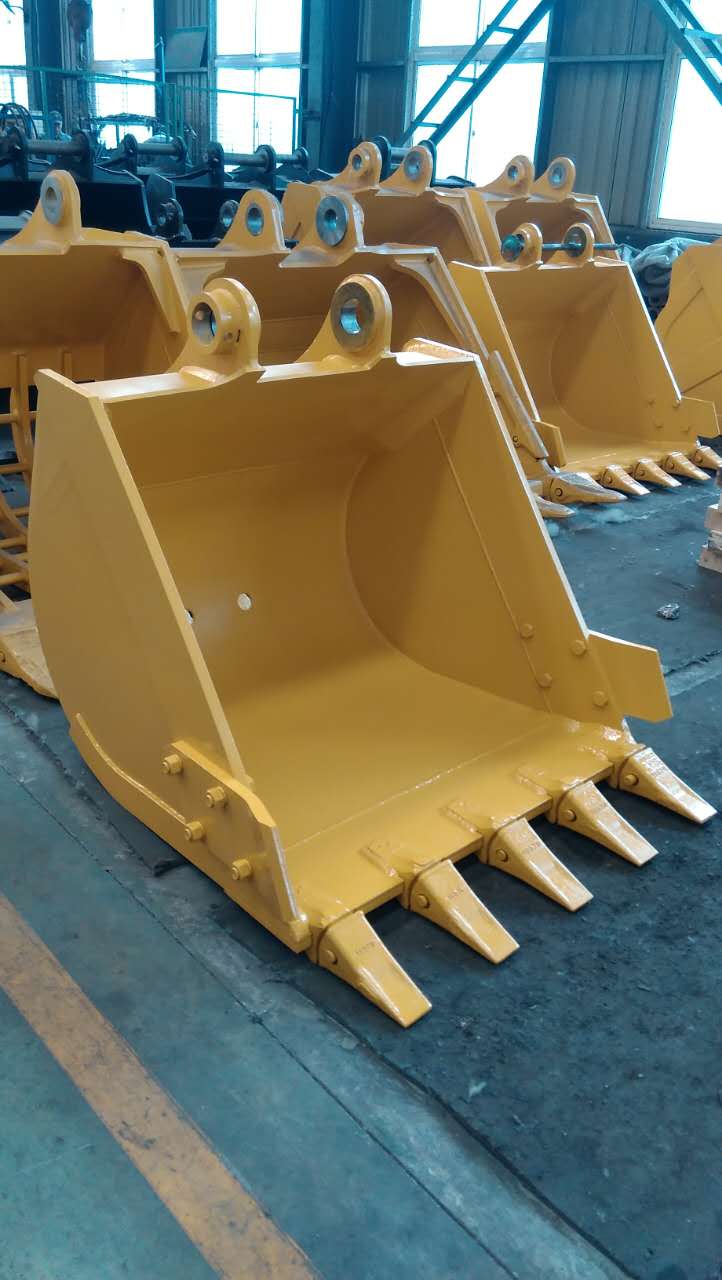
These buckets represent the most common attachment on standard job sites. They work best for topsoil, loam, sand, and light gravel. Manufacturers design them with lighter structural weight. This lighter baseline allows for higher volume capacities per cycle. You move more loose dirt per pass without straining the boom. However, standard duty attachments lack heavy gusseting. They are strictly not suitable for prying or high-impact rock work. Using them in dense clay often bows the cutting edge.
Heavy-duty buckets step up the durability factor significantly. They work best for mixed soils, hard-packed clay, and light rock. They feature thicker cutting edges. You will find reinforced wear straps running horizontally across the bottom shell. This reinforcement absorbs dragging friction effectively. They serve as the default choice for mixed-fleet residential and commercial contracting. If you encounter unpredictable municipal digging conditions, heavy-duty construction prevents sudden equipment failure.
Severe-duty models handle the most aggressive geological challenges. They perform best for shot rock, granite, and highly abrasive layers. Manufacturers build them using high-strength abrasion-resistant steel. You usually see AR400 or AR500 steel ratings. They include thick side-wear plates and heavier lip construction. They also feature reinforced heel bands. The main trade-off involves weight. The heavy deadweight naturally reduces overall soil payload capacity. A massive rock bucket holds less volume than a standard bucket of the same weight class.
Contractors rely on trenching buckets for utility laying and pipe installation in varied ground. Their narrow, deep profile requires specific tooth configurations. Operators typically run tiger teeth on them. These sharp points help maintain penetration in narrow, high-friction cuts. Trenching buckets cut clean, vertical walls. They minimize the amount of backfill material needed later. Their geometry prevents soil from jamming in the upper corners during wet conditions.
Ground Condition and Bucket Suitability Matrix
Bucket Type | Best Material Suitability | Primary Structural Feature | Typical Application |
|---|---|---|---|
Standard Duty | Topsoil, loose sand, loam | Lightweight shell, standard lip | Bulk earthmoving, light grading |
Heavy-Duty (HD) | Mixed soil, packed clay, light rock | Thicker cutting edge, wear straps | General contracting, residential prep |
Severe-Duty / Rock | Shot rock, granite, abrasive ores | AR400/AR500 steel, cheek plates | Quarry work, heavy demolition |
Trenching | Varied soil, deep clay | Narrow profile, high-penetration teeth | Pipe laying, utility channeling |
You must establish a reliable framework for calculating realistic loads. Bucket size does not automatically equal safe capacity. A 1-cubic-yard bucket holds vastly different weights depending on the material. Filled with dry soil, it weighs approximately 2,000 pounds. Filled with wet gravel, it easily reaches 3,400 pounds. Wet clay creates even heavier static loads. You must adjust bucket sizes based on material density. Ignoring density calculations causes dangerous tipping hazards. It also wears out slew rings prematurely.
Machine operating weight directly dictates maximum allowable bucket width. The industry refers to this as the tonnage matching rule. A 20-ton excavator cannot safely swing a bucket meant for a 35-ton machine. Overloading compromises boom structures. It applies immense lateral stress to swing motors during rotation. Consult the OEM lifting chart. Every excavator has a defined tipping load limit. Exceeding this limit lifts the tracks off the ground. This instability threatens operator safety and damages undercarriage components.
Manufacturers use specific terminology on OEM spec sheets. You must clarify these terms before buying. "Struck" capacity means leveling the material flat across the bucket opening. "Heaped" capacity assumes material piled high above the rim. We strongly warn buyers to evaluate baseline stability using heaped capacity numbers. Real-world operator behavior almost always results in heaped loads. Operators scoop aggressively to maximize production. If your calculations rely strictly on struck capacity, you will routinely overload the machine on the job site.
Modern job sites require rapid tool changes. Frame the use of excavator attachments like quick couplers as a distinct weight penalty. A heavy hydraulic coupler adds dead weight to the end of the stick. It also pushes the bucket further away from the stick pin. This alters the machine’s center of gravity negatively. You must deduct the coupler's exact weight from the machine's overall lifting capacity. Do this before finalizing your bucket selection. Failing to account for coupler weight severely reduces effective breakout force.
Teeth determine how efficiently the machine cuts the earth. Selecting the right tooth profile prevents unnecessary hydraulic strain.
Standard/Chisel Teeth: These serve as a good all-rounder for topsoil and loose dirt. They offer a balanced ratio of penetration and blunt durability.
Tiger/Twin Tiger Teeth: These remain essential for frost, hardpan, and compacted clay. They provide the absolute highest penetration capability. However, the sharp points suffer the fastest wear rates in abrasive soil.
Rock Chisel: These deliver maximum durability for abrasive stone and shot rock. They feature a blunter, thicker profile. They resist shattering under extreme direct impacts.
You must evaluate your primary operational tasks when choosing edge styles. Bolt-on reversible edges prove highly effective for smooth grading. They excel in utility work without rocks. You simply unbolt them and flip them when one side wears down. They leave a flat, clean trench bottom. Conversely, welded shanks remain mandatory for high-impact digging. Heavy rock work shears bolt-on edges instantly. Welded shanks fuse directly into the heavy lip construction. They absorb massive shock loads without failing.
You must protect the structural integrity of the bucket shell. Invest in bolt-on side cutters to protect bucket cheeks during trenching. Side cutters slightly widen the cut, reducing sidewall friction against the bucket body. Use lip shrouds for severe rock applications. These thick steel covers slot between the teeth. They protect the leading edge from scalloping wear. A well-configured excavator bucket utilizes wear shrouds efficiently to deflect abrasive sliding friction away from the primary welds.
Buying direct from the machine manufacturer guarantees perfect pin fitment and geometry. OEM buckets match the exact kinematic curve of the machine. However, reputable dedicated attachment fabricators often engineer superior heavy-duty products. These Tier 1 aftermarket builders customize wear packages for specific regional geology. Economy buckets present significant operational risks. They might save upfront capital. Unfortunately, they typically utilize inferior mild steel. This leads to cracked ear plates and bowed lips within the first year of hard use.
Do not trust verbal promises regarding steel quality.
Demand written specifications on steel grades. Look for certified Hardox or AR400 ratings on wear plates.
Inspect gusseting carefully. Gussets must reinforce the transition between the ear plates and the main shell.
Check weld penetration on high-stress points. Multi-pass welds on the ear bracket and lip indicate high manufacturing standards.
Watch out for heavy weld porosity. Tiny holes in the weld bead signal trapped gas and imminent cracking.
Assess the importance of standardizing pin dimensions across your entire fleet. You must verify three critical measurements: pin diameter, dipper gap (the inside width between the mounting ears), and pin centers (the distance between the two pins). Standardizing these dimensions ensures a new digging bucket can be shared freely among machines of similar tonnage. This prevents attachments from sitting idle. Strategic excavator bucket selection prevents bottlenecks and maximizes asset utilization across varied job sites.
Selecting the right bucket dictates the rhythm of your entire earthmoving operation. You must identify the most severe ground condition the machine will face 80% of the time. Use this baseline to spec the steel grade and wear parts accordingly. Always calculate material density against machine tonnage to prevent structural overloading. Remember to account for the heaped capacity and the weight of your quick coupler. We encourage all buyers to consult their machine’s specific lifting capacity charts meticulously. Finally, request detailed material spec sheets from attachment dealers before ever issuing a purchase order.
A: Yes, lighter materials allow for slightly larger capacities. However, exceeding OEM maximum width recommendations carries severe risks. You risk side-tipping the machine. You also induce structural fatigue on the boom cylinders. Additionally, an oversized bucket drastically reduces breakout force, even in light soils.
A: Trenching buckets feature a narrow, deep profile meant specifically for utility channels. They cut steep, clean walls. Standard buckets utilize a wider, shallower profile. Operators use standard buckets for mass mass excavation, bulk truck loading, and general site grading.
A: You should replace teeth when wear significantly diminishes penetration capability. Blunt teeth slow down cycle times and strain hydraulic pumps. You must replace them before wear reaches the welded shank. Letting wear grind down the shank causes catastrophic failure and requires expensive re-welding.
A: Yes. Quick couplers add physical distance between the stick pin and the bucket tip. This extension slightly reduces breakout force. Furthermore, couplers add dead weight to the stick. This directly reduces the safe lifting capacity available for your actual bucket payload.


